Kawasaki Ninja 300 : Kawasaki has quietly refreshed its beloved entry-level sportbike, the Ninja 300, for the 2026 model year, injecting new life into a machine that’s been turning heads since 2012.
Riders in India got the update early this year, with vibrant paint schemes stealing the show while the core thrills remain untouched.
A Stylish Refresh That Turns Heads
The 2026 Kawasaki Ninja 300 hit Indian showrooms in January at Rs 3.17 lakh ex-showroom, sticking to the same price tag post recent GST tweaks.
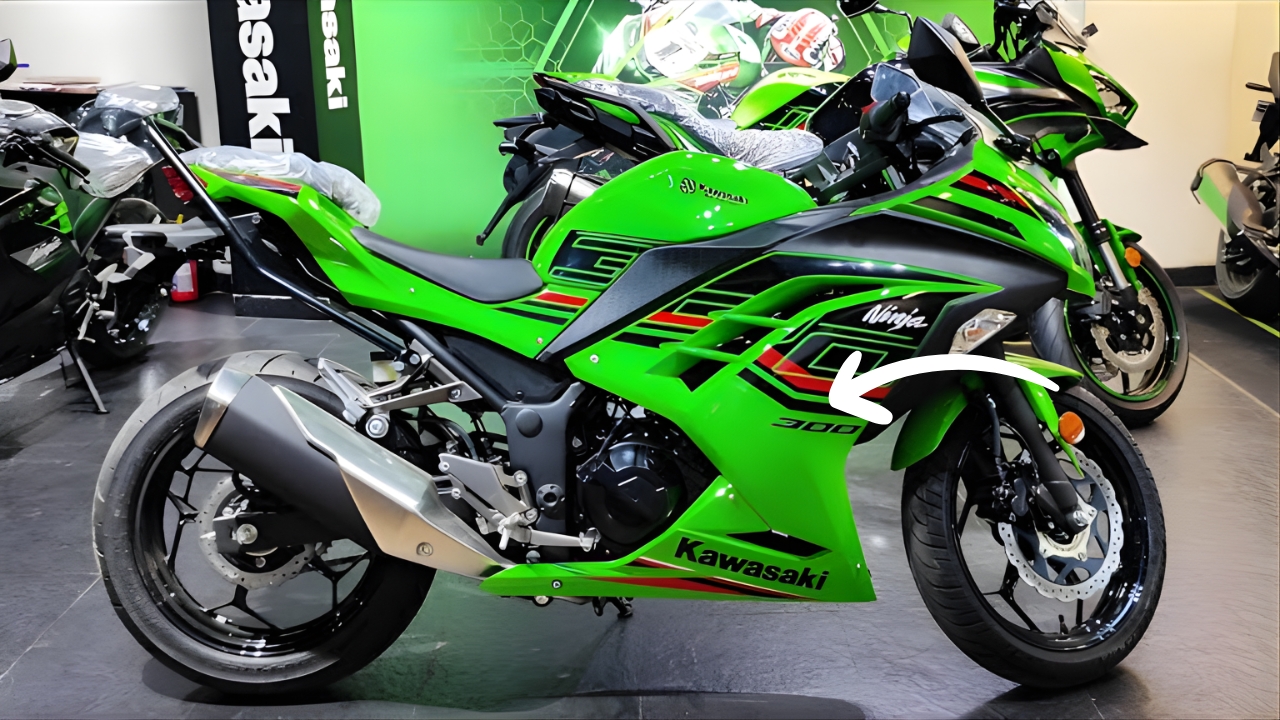
What grabs attention first are the two new color options: the classic Lime Green and a striking Candy Lime Green with Ebony accents, both featuring sharper graphics that set them apart from last year’s model.
These hues nod to Kawasaki’s racing heritage, making the bike look even more aggressive under streetlights or on twisty roads.
The design stays true to the Ninja family DNA—sharp fairings, a hunched-forward stance, and those iconic angular lines that scream speed even when parked.
Updates from prior years like the larger windscreen for better wind protection and dual projector LED headlights continue to shine, offering improved visibility without compromising the sleek profile.
At 179kg kerb weight, it’s nimble enough for city dashes yet planted for highway hauls, measuring 2015mm long with a 1405mm wheelbase.
Power and Punch from a Proven Twin
Under the skin, the 296cc liquid-cooled parallel-twin engine soldiers on unchanged, pumping out 38.88bhp at 11,000rpm and 26.1Nm at 10,000rpm.
This rev-happy mill loves to climb, hitting its stride around 6,000rpm and screaming to a 13,000rpm redline with minimal vibes thanks to clever balancing.
Paired with a slick six-speed gearbox and assist-slipper clutch, shifts feel precise, making it forgiving for new riders yet rewarding for those who wring it out.
Fuel-injected with dual throttle valves, it complies with BS6 norms and sips around 25-30kmpl in mixed conditions, backed by a 17-litre tank for decent range.
Braking comes via a 290mm front petal disc and 220mm rear, both with dual-piston calipers and dual-channel ABS for confident stops.
Suspension duties fall to 37mm telescopic forks up front (120mm travel) and a preload-adjustable monoshock rear (132mm travel), delivering sharp handling that carves corners effortlessly.
The semi-digital console shows essentials like speed, tach (analogue style), fuel, trips, and time, though it skips Bluetooth—keeping things simple and reliable.
MRF tyres (110/70-17 front, 140/70-17 rear) on 17-inch alloys grip well enough for spirited rides, though some wish for stickier rubber.
Why Riders Can’t Get Enough
Long-time fans rave about the Ninja 300’s balance: smooth in traffic, stable at triple digits, and comfy for hours thanks to the wide, soft seat and supersport pegs.
One owner called it “perfect for city-highway mixes—no vibes, great pickup, steady mileage,” highlighting its low-maintenance appeal.
Its diamond-frame chassis shines on winding roads, tipping in eagerly with a 27-degree rake and 93mm trail for predictable feedback.
In India, where service networks are growing, it holds value well, blending Japanese build quality with approachable power that hooks beginners upgrading from 200cc commuters.
Top speed hovers around 182kmph, with 0-100kmph in about 5.6 seconds—plenty for backroad blasts without overwhelming novices.
Facing Off Against the Pack
The Ninja 300 squares up against heavy hitters like the KTM RC 390, TVS Apache RR 310, BMW G 310 RR, and Yamaha YZF-R3, all vying for the 300cc sports throne.
While rivals pack more grunt or tech like ride modes, the Ninja edges out with its refined twin, lighter feel, and proven reliability at a competitive Rs 3.17-3.57 lakh tag.
The RC 390’s single-cylinder snap suits track days, but the Ninja’s smoother delivery wins for daily duties. Apache RR 310 offers electronics and value, yet lacks the Ninja’s charisma.
In a segment craving thrill on a budget, Kawasaki’s steed remains a smart pick for those prioritizing fun over frenzy.
Kawasaki Ninja 300 What’s Next for the Green Machine?
As electric threats loom and emissions tighten, Kawasaki seems committed to keeping the Ninja 300 relevant with cosmetic tweaks and subtle evolutions.
Will we see ABS tweaks, traction control, or a mild-hybrid twist by 2027? For now, these fresh 2026 colors ensure it stays a showroom magnet, reminding us why this little Ninja has endured.
Also Read This : Realme P4 Pro 5G 7000mAH battery smartphone with 256GB storage, price is affordable
Enthusiasts in Delhi and beyond are snapping them up, proving the formula—style, speed, simplicity—still sells. If you’re eyeing an entry into twin-cylinder sports, the 2026 Ninja 300 beckons with open throttle.