Kia Sonet : The Kia Sonet continues to hold its ground as one of India’s most sought‑after sub‑4‑metre SUVs in 2026, blending sharp design, strong feature lists, and multiple powertrains in a compact, easy‑to‑live‑with package.
With updates since its Jan‑2024 facelift, plus ADAS‑led safety enhancements, it remains a serious choice for urban buyers who want SUV stance without the running costs of a larger car.
Exterior Design and Stance
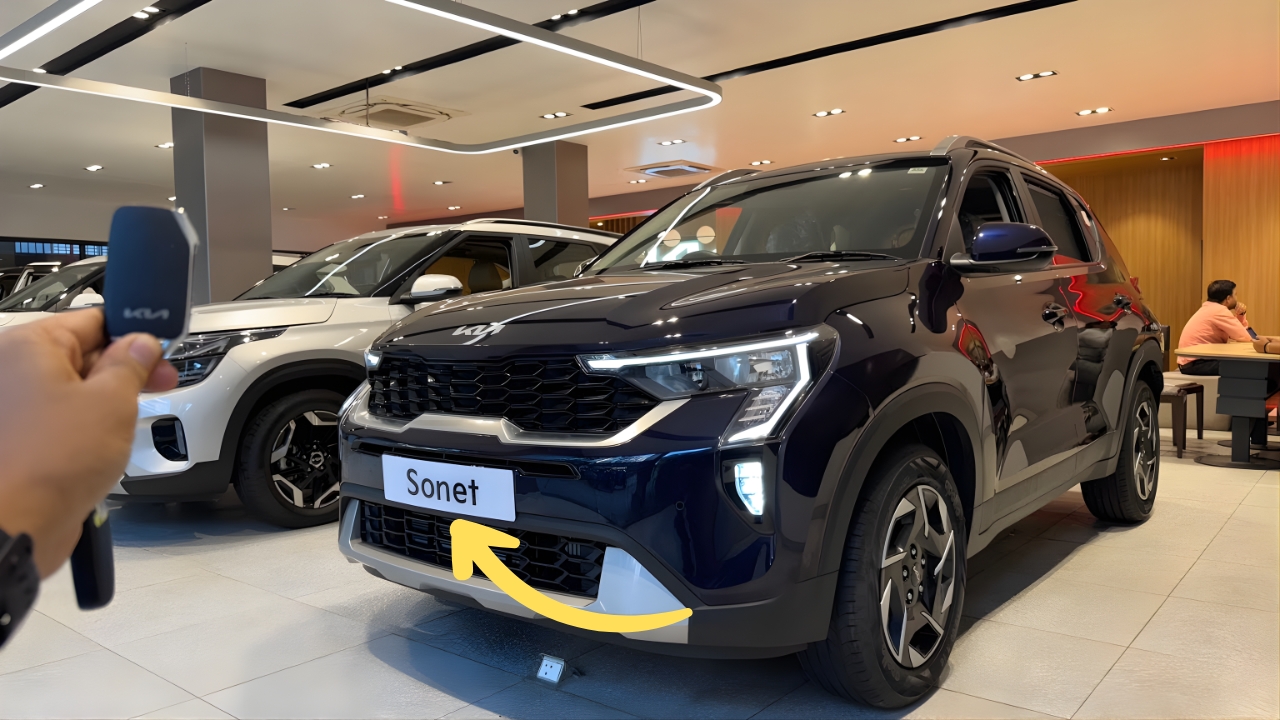
Kia has kept the Sonet visually aggressive, with a bold front grille, split‑headlamp treatment, and chunky bumper that give it genuine SUV presence despite its compact footprint.
The 2026 models retain muscular wheel arches, roof rails, and a short rear overhang that translate into a surprisingly rugged look in Panipat and other semi‑urban markets.
LED DRLs, LED fog lamps, and optional alloy wheels on mid and higher trims complete the upmarket feel, while 205 mm of ground clearance makes potholes and uneven roads far less intimidating.
Inside: Features That Feel Premium
Step inside and the Sonet feels more upmarket than its price tag suggests, especially in trims like HTK+, HTX, GTX+, and the rugged‑looking X‑Line.
Ventilated front seats, a 4‑way powered driver seat, ambient cabin lighting, and a widescreen dual‑display setup (often 10.25‑inch infotainment and digital cluster) are now part of the upper‑trim experience.
Kia’s connected‑car tech, voice commands, OTA updates, and a 360‑degree camera make parking in crowded Indian lanes easier, while an air purifier, wireless charger, and cruise control add to the long‑distance comfort factor.
Engines, Gears, and Everyday Driveability
Under the hood, the Sonet runs three core engines: a 1.2‑litre naturally aspirated petrol, a 1.0‑litre turbo‑petrol, and a 1.5‑litre diesel with a variable‑geometry turbo.
The 1.2 MPI is tuned for decent fuel efficiency (around 18–19 kmpl) and relaxed city driving, while the 1.0 T‑GDI packs noticeably more punch at low revs and suits highway runs despite a slightly noisier soundtrack.
The 1.5‑litre CRDi diesel remains the torque king, returning roughly 22 kmpl in manual form and offering strong pulling ability that shines on inter‑city runs from places like Delhi or Chandigarh to smaller towns.
Gearbox options include a 5‑speed manual, 6‑speed traditional manual, 6‑speed iMT, 6‑speed DCT, and a 6‑speed automatic, letting buyers pick between fuel‑conscious efficiency and refined take‑off comfort.
The X‑Line trim is restricted to turbo‑petrol and diesel with automatic/iMT, giving the rugged‑themed variant a more planted and relaxed feel on highways.
Safety, Tech, and ADAS Edge
One of the Sonet’s biggest strengths for 2026 buyers is its safety spec‑sheet, especially in the higher trims.
All variants come with essentials such as dual front airbags, ABS with EBD, brake assist, ESC, hill‑hold, and TPMS, while the top trims add curtain airbags, ISOFIX mounts, and 360‑camera coverage.
Kia’s camera‑based ADAS at Level‑1 brings features like forward‑collision warning, lane‑departure warning, lane‑keep assist, and driver‑attention alert, which work well on Indian highways as long as lane markings are reasonably visible.
For a car in the ₹7.3–14 lakh ex‑showroom bracket, such a package is rare in the sub‑4‑metre segment and helps rationalize the slightly higher price of the GTX+ and X‑Line trims.
Features like multiple drive modes, idle‑start‑stop, and rear‑seat air‑vents also make it a practical daily‑driver for families who regularly cover 100–150 km shuttles.
Pricing, Variants, and Value
In 2026, the Kia Sonet is available in about 21 variants across nine trims: HTE, HTE (O), HTK, HTK(O), HTK+, HTK+(O), HTX, GTX+, and X‑Line.
Ex‑showroom prices start from roughly ₹7.3 lakh for the base 1.2 Smartstream G petrol HTE and stretch up to about ₹14 lakh for the fully loaded diesel GTX+ automatic.
On‑road in Delhi‑NCR markets such as Panipat, Ghaziabad, and Noida, that typically translates to an out‑the‑door range of around ₹8.3 lakh to ₹16.6 lakh, depending on variant and insurance.
Sunroof‑equipped models begin at HTK(O) and move up to HTX, GTX+, and X‑Line, creating a clear hierarchical ladder for buyers who want everything from basic protection to a feature‑rich family SUV.
For a buyer in your segment, the HTK+ or GTX manual trims often strike the sweet spot between price, features, and running costs.
Kia Sonet Who Should Buy the Kia Sonet in 2026?
The Kia Sonet in 2026 suits anyone who wants an SUV stance, strong safety, and a well‑featured cabin without stepping into the C‑segment price band.
It works exceptionally well for city‑based users who occasionally travel out of town, thanks to the 1.5 diesel’s torque and the 1.0 turbo’s mid‑range punch, both of which feel more engaging than many rivals’ naturally aspirated engines.
Also Read This : Redmi Note 14 5G comes with AI features, design is stylish
With its ADAS‑packed top trims and strong dealer presence in North India, the Sonet remains a practical, modern, and distinctly premium‑feeling sub‑4‑metre SUV that’s hard to ignore in today’s crowded compact SUV market.