Volkswagen Virtus 2026 : The Volkswagen Virtus has been a standout in India’s midsize sedan segment since its debut, earning praise for its solid build, peppy engines, and that coveted 5-star safety rating.
Now, whispers from test tracks and spy shots point to a 2026 facelift that’s set to elevate it further with sharper looks, smarter tech, and safety upgrades that could make rivals sweat.
Buzz Around the Upcoming Refresh
Excitement is building as Volkswagen gears up for the Virtus facelift, expected to hit Indian roads in Q3 2026, roughly around July to September.
This mid-cycle update comes at a time when sedans are fighting for relevance against SUV mania, but the Virtus has held strong with its blend of European engineering and practical appeal.
Spy images captured on our highways show camouflaged prototypes with tweaked bumpers and lighting, hinting at a design that’s evolutionary yet bold enough to turn heads.
Industry insiders suggest this refresh aligns with updates to its SUV sibling, the Taigun, and Skoda counterparts like the Slavia and Kushaq.
Volkswagen seems keen on keeping the MQB A0 IN platform intact, ensuring the same reliable dynamics that made the original a hit among enthusiasts who crave highway poise over city hop.
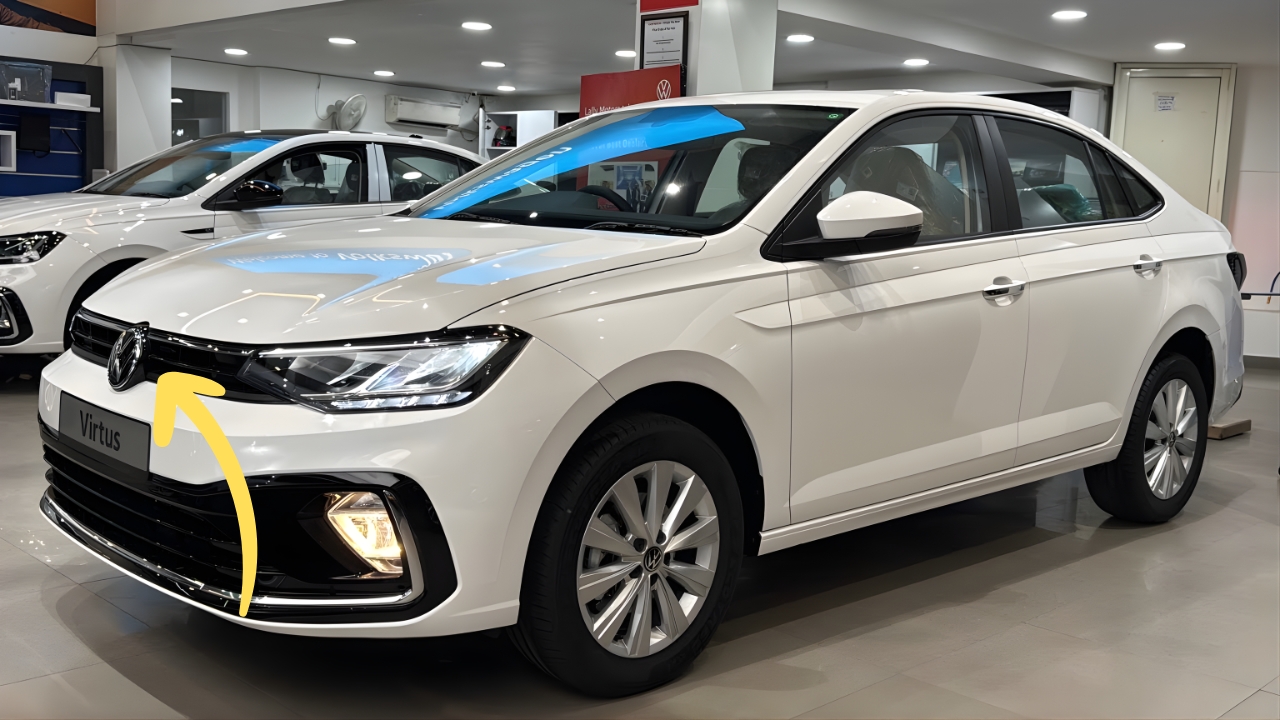
Exterior Evolution: Subtle Yet Striking
Don’t expect a radical overhaul—the Virtus facelift sticks to its athletic silhouette, measuring about 4,561mm long with that fastback roofline intact.
Up front, a revised grille takes a more rectangular stance, paired with slimmer LED headlights and a bolder lower bumper housing redesigned fog lamps.
At the rear, connected LED tail lamps and a chunkier diffuser add a sportier vibe, while new alloy wheel designs—possibly up to 17 inches—fill out the arches nicely.
A panoramic sunroof on top-spec trims promises to flood the cabin with light, a segment-first move that could lure sun-loving buyers.
These changes keep the Virtus looking premium without straying from its clean, Germanic lines that age so gracefully.
Cabin Upgrades: Tech and Comfort Dialed Up
Step inside the 2026 Virtus, and you’ll find a cabin that’s more inviting than ever. A larger 10.1-inch touchscreen infotainment system anchors the dash, supporting wireless Android Auto and Apple CarPlay, flanked by a 10.25-inch digital driver’s display for that fully digital cockpit feel.
Soft-touch materials, revised trims, and new upholstery options elevate the premium quotient, with ambient lighting and automatic climate control as standard fare.
Rear passengers get generous legroom, and the boot remains cavernous at over 500 liters—perfect for weekend getaways.
Ventilated seats and a potential heads-up display in GT variants round out the comforts, making long drives less taxing.
Powertrain Continuity with Smart Tweaks
Under the hood, familiarity breeds contentment. The 1.0-liter TSI turbo-petrol churns out 115PS and 178Nm, now possibly mated to an 8-speed torque converter automatic for smoother shifts and better efficiency around 19-20 kmpl.
The hero 1.5-liter TSI EVO stays punchy at 150PS/250Nm, with its active cylinder tech for real-world sipping, available with 6-speed manual, 7-speed DSG, or the new auto option.
No diesel or hybrid hints yet, but these mills promise the same fun-to-drive ethos, backed by VW’s bulletproof build. Expect ARAI figures holding steady at 18-20 kmpl, with real-world hauls impressing on highways.
Safety Leap: ADAS Enters the Fray
Safety was already a Virtus strong suit with its 5-star GNCAP nod and standard 6 airbags, ESC, and TPMS. The facelift amps it up with Level 2 ADAS suite—think adaptive cruise control, lane-keep assist, autonomous emergency braking, and traffic jam assist.
A 360-degree camera simplifies parking in tight urban spots, while rain-sensing wipers and hill-hold add everyday practicality. This tech infusion positions the Virtus as a safer bet for families, bridging the gap with pricier imports.
Pricing and Rivals in the Ring
Word on the street pegs the facelift starting at Rs 11.5 lakh ex-showroom, climbing to Rs 19 lakh for loaded GT Plus trims—a modest hike over the current Rs 10.5-19 lakh range.
This keeps it competitive against the Hyundai Verna, Honda City, and Skoda Slavia, especially with ADAS and sunroof stealing the show.
Buyers face a dilemma: snag the current model with discounts or wait for these bells and whistles? For those prioritizing tech and safety, patience might pay off.
Volkswagen Virtus 2026 Why the 2026 Virtus Matters
In a market tilting towards SUVs, the Virtus facelift reminds us why sedans endure—superior ride refinement, boot space, and that engaging drive.
Volkswagen’s Indian arm is betting big on this update to sustain momentum, blending global tech with local tastes.
Also Read This : Oppo Reno15 C 5G 120Hz smooth gaming display smartphone with 80W fast charging, look is amazing
As prototypes multiply on roads, anticipation grows; this could be the refresh that cements the Virtus as the segment benchmark.